When a teenager loses interest in school, adults often focus on what she is no longer doing: submitting assignments, studying for tests, participating in class, or talking about graduation.
Those concerns are valid, but they may not reveal what is missing. Some students struggle to connect today’s work with a future they can imagine. Algebra, writing assignments, and required credits may feel like disconnected obligations rather than steps toward something meaningful.
Career training can help make that connection more visible. A practical course, workplace skill, or industry-recognized certification may allow a teenager to see how education relates to independence, employment, and a future she has helped choose.

Career Exploration Gives Schoolwork a Destination
“Graduate from high school” is important, but it may feel distant to a student who is discouraged or behind. A specific career interest can give academic work a clearer destination.
Once a girl becomes interested in healthcare, construction, culinary work, technology, business, childcare, or another field, school subjects can take on a more practical purpose:
- Mathematics supports measuring, budgeting, dosage calculations, or bookkeeping.
- Writing is necessary for applications, emails, reports, and workplace communication.
- Science connects with healthcare, agriculture, food safety, or environmental work.
- Technology becomes a tool for research, scheduling, design, or data management.
- Punctuality and follow-through become employability skills.
The schoolwork has not necessarily changed. The student’s understanding of why it matters has. The National Career Clusters Framework helps learners explore how their interests and strengths may fit in the working world.
Hands-On Learning Can Reveal Strengths That Grades Miss
A teenager who has struggled in a conventional classroom may assume she is not capable of learning. Hands-on experiences can challenge that belief. She may discover that she can follow a multistep process, learn technical vocabulary, work safely with tools, communicate with customers, care for another person, organize supplies, solve a practical problem, and complete a task with a visible result.
These are genuine forms of competence. Career training should not lower expectations or steer a student away from academics. Instead, it can give her another setting in which to recognize her strengths and understand why foundational academic skills remain important.
Certifications Make Progress Concrete
Traditional academic progress can be difficult for a discouraged student to see when graduation is still months or years away. A certification or completed training unit can provide a nearer milestone. Depending on age, location, eligibility, and available programs, options might include CPR or first aid, food-handler training, CNA preparation, pharmacy-technician preparation, workplace safety, computer credentials, early-childhood coursework, or customer-service training.
Not every option is appropriate for every teenager, and completing a class does not automatically guarantee certification or employment. Families should verify age requirements, testing rules, state regulations, fees, and whether employers recognize a credential. When carefully selected, a credential can tell a student: “You completed something real, and it can become part of your next step.”
Career Training Still Requires Academic Skills
Career education is not an escape from reading, mathematics, science, or communication. It often shows why those skills matter. Healthcare requires accurate reading and attention to detail. Culinary work uses measurement, timing, planning, and sanitation. Construction and design require mathematics and spatial reasoning. Nearly every workplace requires communication, reliability, and problem-solving.
Instead of saying, “You need to pass this because adults say so,” a parent or teacher can ask, “What skills will you need for the work you are interested in, and what can we strengthen now?”
Real Work Builds More Than Technical Ability
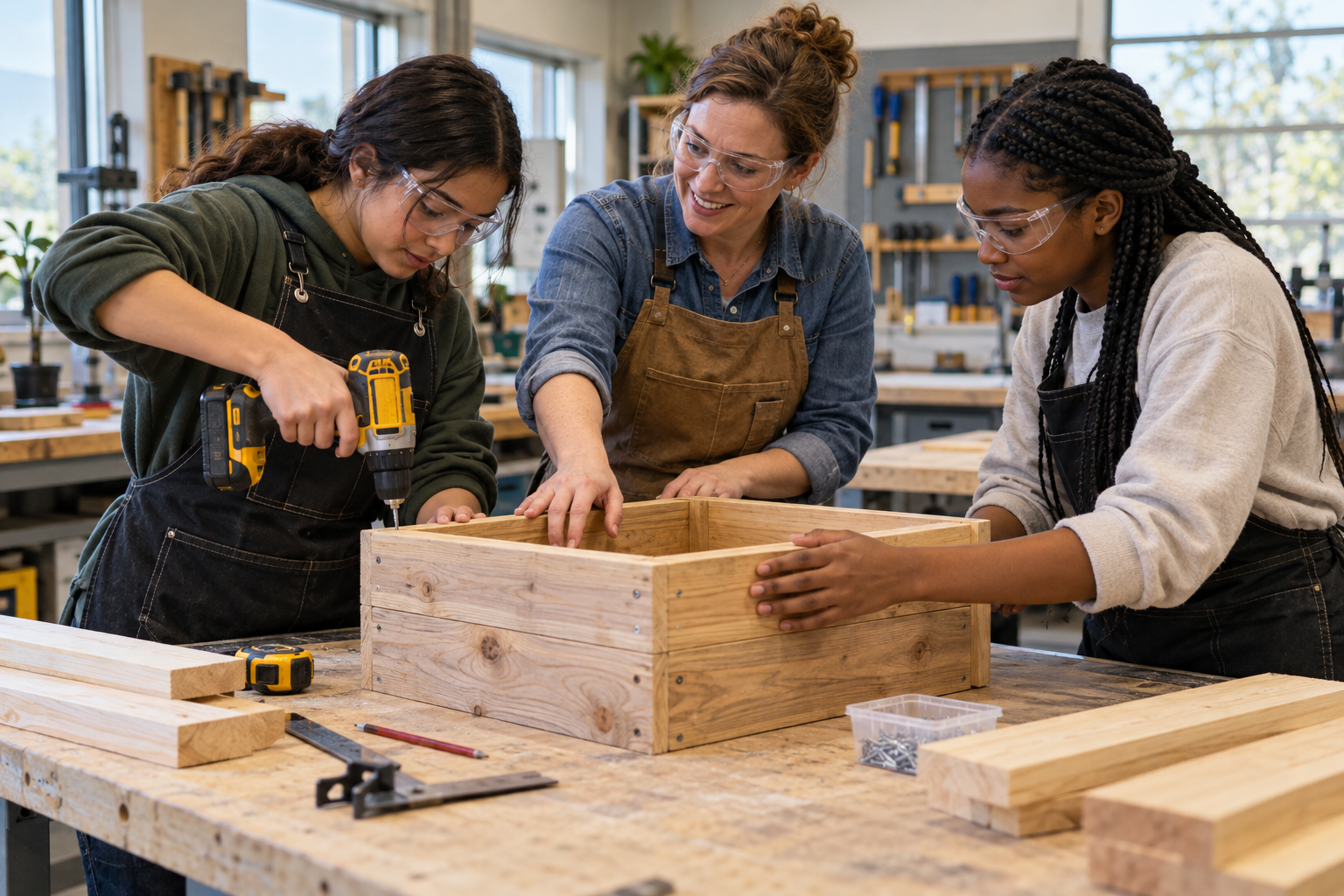
Career readiness includes habits that apply across nearly every occupation: arriving on time, following instructions, asking useful questions, receiving correction, completing tasks, working with different people, solving minor problems, communicating when help is needed, taking responsibility for mistakes, and trying again.
These habits cannot be developed through a single lecture. Structured, supervised work experiences and project-based learning let a teenager encounter realistic expectations while supportive adults remain close enough to provide guidance.
Career Exploration Should Expand Choices
A student does not need to select a lifelong occupation at age 15 or 16. Exploration is useful even when it helps her rule something out. She may learn that she enjoys healthcare but dislikes direct patient care, or loves designing projects but does not enjoy building them.
Ask what activities hold her attention, what environments help her work well, which skills come naturally, what she is willing to practice, what education a career requires, and what the work actually looks like each day. The Bureau of Labor Statistics career guide for students offers information on duties, work environments, education, training, wages, and employment projections.
A Future Goal Can Make Graduation Feel More Relevant
A career goal can help a teenager see her diploma as a tool she needs, rather than an adult priority. She may still need help with attendance, organization, missing credits, or discouragement, so career training works best as part of a complete plan.
Connect her interests with the education required for related careers, credits already earned, remaining graduation requirements, relevant courses or certifications, short-term academic goals, opportunities to practice workplace habits, and a realistic next step after graduation.
Encourage Exploration Without Creating Pressure
Keep career conversations open-ended: “What part of that job sounds interesting?” “Would you like to learn what training it requires?” “What is one way you could try this before committing?” Avoid turning a new interest into an immediate demand. A teenager who mentions nursing does not need a complete college plan that evening.

Career and Academic Opportunities at Trailhead
Trailhead Girls Academy is a non-therapeutic private boarding school for girls ages 12–18. Its current program combines academics with real-world life skills, responsibility, relationship-building, and monitored independence.
Trailhead identifies high-school diploma preparation, concurrent college enrollment, and vocational options—including CNA, CPR, and pharmacy-technician opportunities—as potential parts of its academic program. Specific options may depend on a student’s age, academic standing, interests, eligibility, availability, and length of enrollment.
Motivation Often Grows Through Meaningful Action
Adults sometimes wait for a teenager to feel motivated before expecting her to engage. In practice, motivation may begin after she takes one manageable step and sees evidence that her effort matters.
Completing a practical project, researching a career, earning a certification, or meeting a workplace expectation can help a student see herself not only as someone who has struggled in school, but as someone who can learn, contribute, and prepare for adult life.
Career training cannot solve every academic problem. It can, however, give education a clearer purpose—and give a teenager a reason to take the next step. Families can explore Trailhead’s academic program or contact admissions to discuss academic and vocational goals.